AI & Green Tech Transforming Floating Homes
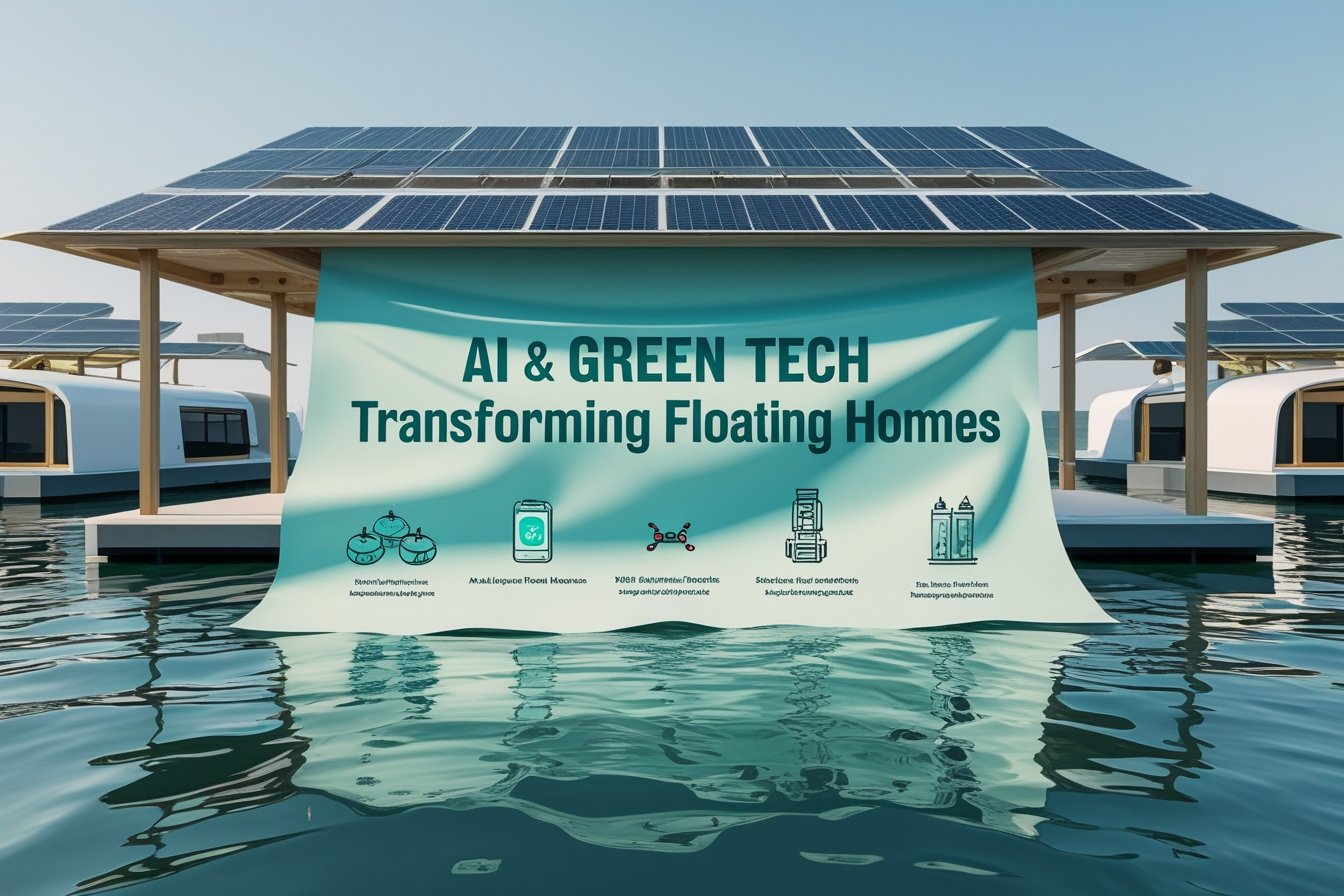
Imagine waking each morning to gentle waves lapping beneath your floor, while an invisible AI brain orchestrates your sustainable living. Welcome to the new era of floating homes, where cutting-edge green technology meets artificial intelligence to create resilient, self-sustaining dwellings on water. From energy loops that harvest sun and wind to circular water-recycling systems, these homes are rewriting the blueprint for eco-friendly living. Dive in as we unveil six pioneering ways AI and green tech are reshaping life afloat.
How AI Engineering Shapes Floating Houses:
Gone are the days of boxy houseboats. Today’s floating homes are designed using AI-driven platforms that run thousands of simulations in minutes, optimizing hull shapes, buoyancy chambers, and material choices for maximum stability with minimal resource consumption. By feeding climate data, wave patterns, and weight distributions into machine-learning models, architects tailor each home’s structure to local water conditions, cutting maintenance and energy costs. The result? Homes that ride waves effortlessly require fewer structural reinforcements and adapt over time as the AI “learns” settlement shifts and seasonal temperature swings.
Eco-Integrated Energy Loops:
With limited roof and deck space, floating homes need creative energy solutions. Solar panels, micro-wind turbines, and even miniature hydro-generators anchored beneath decks form a hybrid renewable energy network. AI controllers analyze weather forecasts, power demand, and battery storage levels to balance the mix, redirecting surplus solar output into water-heating or sending extra wind-turbine juice to neighbor homes via a smart microgrid. This closed-loop energy system slashes reliance on shore power, letting residents live off-grid without sacrifice.
Zero-Waste Water Treatment at Sea Level:
Water scarcity and pollution are pressing issues, especially at sea. Floating homes now sport AI-powered greywater and blackwater treatment units that mimic wetlands using planted biofilters. Sensors monitor nutrient levels, turbidity, and microbial activity; if nitrates spike, the AI adjusts flow rates or activates UV-sterilization loops. Captured rainwater joins reclaimed greywater in a modular tank array, ensuring every drop is reused for flushing, irrigation, or even potable use after reverse osmosis. The result is a zero-waste water cycle where clean water continuously regenerates itself on deck.
Green Tech Cultivates Food on Deck:
Why source produce from faraway farms when you can grow greens on your floating patio? Aquaponic beds combine fish tanks and hydroponic troughs so nutrient-rich effluent from tilapia or prawns feeds leafy vegetables. AI vision systems track plant health, identifying discoloration, pest infestations, or pH imbalances in real-time. When a problem emerges, robots deliver precise doses of organic nutrients or beneficial microbes. This mini farm-to-table ecosystem yields fresh vegetables, protein-rich fish, and oxygenates surrounding waters, turning your home into a living biosphere.
AI-Driven Docking & Resource Networks:
Floating communities flourish when they share resources. AI-powered aquaports function like air traffic control for boats, assigning optimal docking spots based on boat size, departure times, and maintenance needs. Integrated IoT platforms let neighbors barter excess solar power, borrow desalinated water, or sync communal compost units. Even waste pickup is optimized: AI trucks navigate the shortest marine-road routes to collect recyclables. This connected infrastructure transforms a cluster of floating homes into a cohesive, efficient waterborne village.
AI-Powered Climate Adaptation:
As sea levels rise and storms intensify, resilience becomes non-negotiable. Machine-learning models digest global weather data, projecting extreme events up to weeks ahead. When a swell-height warning triggers, automated buoyancy pumps lower ballast or angle the hull to ride waves sideways, minimizing stress on joints and mooring lines. Under the floor, sensors watch for corrosion or fatigue cracks; any anomaly prompts immediate alerts and even 3D-printed part orders for rapid repair. These homes not only withstand nature’s fury, they evolve to meet it.
Conclusion:
Floating homes infused with AI and green tech aren’t just a futuristic dream, they’re a practical solution to land shortages, climate threats, and resource constraints. By blending renewable energy, zero-waste water cycles, and automated resilience, these buoyant sanctuaries point the way to a truly sustainable living paradigm. As the technology matures, expect entire floating neighborhoods, self-sufficient, networked, and resilient, to redefine coastal living worldwide.
FAQs
1. What exactly is a floating home?
A floating home is a permanent dwelling built on a buoyant foundation, like a pontoon or hull, allowing it to float on water while staying stationary at a dock or anchor point.
2. How does AI save energy in floating homes?
AI systems balance solar panels, wind turbines, and batteries in real time, forecasting weather and predicting power use to maximize renewable energy harvesting and cut grid reliance.
3. Which green technologies are most common?
Key green tech includes rooftop solar arrays, micro-hydro generators, rainwater harvesters, greywater biofilters, aquaponic farms, and thermal insulation made from recycled materials.
4. Are floating homes safe against storms and floods?
Yes—modern floating homes use AI-monitored mooring, adjustable ballast systems, and corrosion-resistant materials to adapt to waves and rising water levels without damage.
5. Can floating homes be fully off-grid?
Absolutely. By combining renewable energy, water-recycling units, and local aquaponic farming, many floating homes operate entirely off-grid year-round.
6. What’s the cost of a green, AI-powered floating home?
Prices vary widely, but expect a premium of 15–25% over land homes due to specialized foundations, AI systems, and custom green-tech installations, often offset by long-term savings.